
What Slower PE Fundraising Could Mean For Tire And Auto Service Owners Thinking About Selling
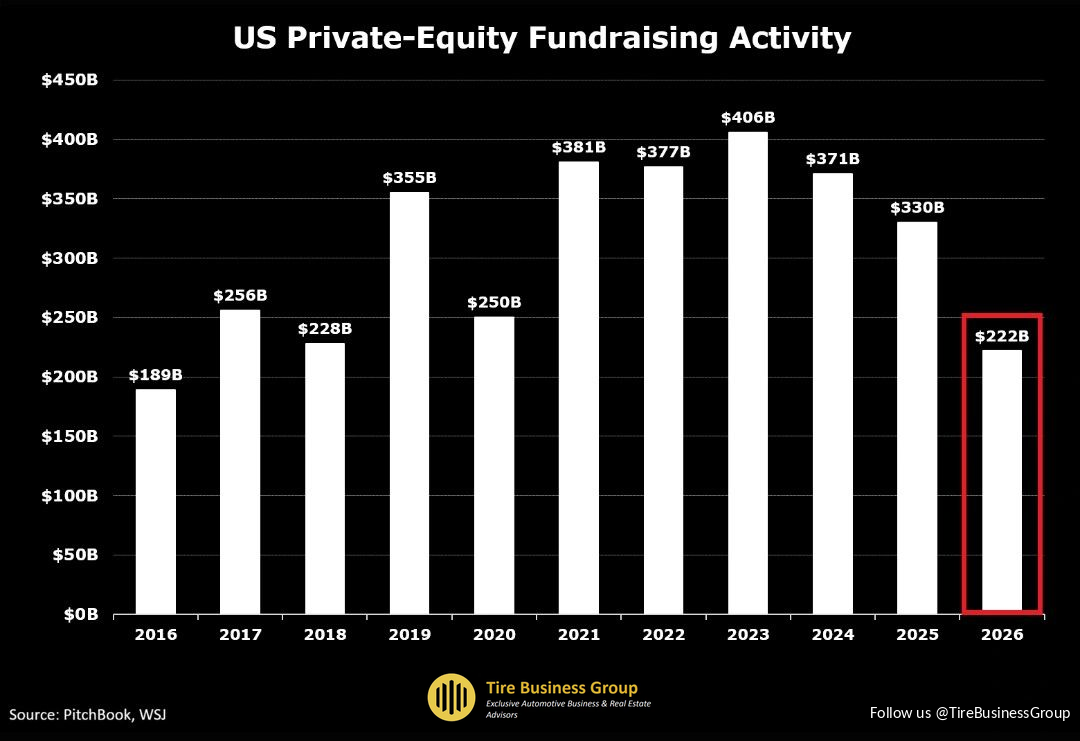
US private equity firms are struggling to attract new capital. According to PitchBook data reported by the Wall Street Journal, PE funds raised about $222 billion from investors in the first nine months of 2026. That puts this year on track to be the weakest since 2020, and it would mark the third straight annual decline from the 2023 peak.
If you own a tire store or auto service business, Wall Street fundraising numbers probably feel a long way from your shop floor. They are closer than they look. A lot of the biggest buyers in our industry are backed by private equity, and that raises a question worth thinking about now:
If I decide to sell in the next few years, will the buyers still be there?
Nobody can answer that with certainty. Plenty of PE money is still out there, and well run shops continue to sell. But when the firms behind the consolidators have a harder time raising new funds, it can change how they buy: what they will pay, how they structure the deal, and which businesses make the cut.
Why PE Fundraising Has Slowed
Higher interest rates. Borrowing costs more, which makes leveraged acquisitions harder to pencil and has made it tougher for PE firms to sell companies at attractive prices.
Slower exits. When firms cannot sell what they already own, they cannot return cash to their investors, and those investors become more reluctant to commit to the next fund.
Weaker returns. Reporting suggests private equity has trailed public markets for several years, which takes some of the shine off the asset class.
Pressure on smaller funds. Firms managing less than $15 billion are reportedly feeling the squeeze most, and that is the middle market where many automotive deals get done.
What This Could Mean For Buyers In Our Industry
More selective buyers. Groups with less fresh capital tend to focus on the best stores in the best markets rather than buying everything in a region.
More scrutiny in diligence. Clean financials, documented car counts, and steady margins may matter even more than they did a few years ago.
Creative deal structures. Earnouts, seller financing, or holdbacks could show up more often when buyers want to share risk with sellers.
Real estate in focus. Owning your building gives you options, whether that is selling the real estate with the business, keeping it and collecting rent, or a sale leaseback later.
Opportunity for other buyers. Strategic operators, regional groups, and private buyers may step in where some PE backed groups pull back.
Questions To Ask Yourself Today
☐ Are my books clean enough to hold up to a buyer's quality of earnings review?
☐ Is my business growing, flat, or declining over the last three years?
☐ Do I own my real estate, and do I know what it is worth on its own?
☐ How dependent is the business on me personally?
☐ Who are the likely buyers in my market today, and are they PE backed or privately owned?
☐ Would I rather sell in today's market than wait and see where rates and capital go next?
Why This Matters Right Now
Some numbers worth knowing, current as of October 2026, based on PitchBook data as reported by the Wall Street Journal and others:
US PE funds raised about $222 billion through the first nine months of 2026.
That compares with roughly $330 billion raised in all of 2025 and about $406 billion in 2023, the recent peak.
US middle market PE fundraising reportedly fell more than 40% in 2025, its weakest year for that segment since 2018.
PE firms are still sitting on an estimated $2 trillion in uninvested capital, much of it in older funds under pressure to put money to work and show returns.
That last point is important. Capital has not disappeared. It has become more disciplined. Buyers with money to deploy still need good businesses to buy, and the best tire and automotive service businesses, especially those with strong real estate, continue to draw interest.
The Point
Markets change, and the buyer pool changes with them. The owners who come out ahead are the ones who know what their business and real estate are worth before they need to sell, not after.
If you are thinking about selling in the next one to five years, or just want an honest read on how today's buyers would look at your business and your property, we are happy to put together a complimentary, confidential valuation. No obligation, just a clear picture of where you stand.
Harry Archer
Founder, Tire Business Group
harry@tirebusinessgroup.com | 678-522-1553
